
Most furnace buying guides were written for homeowners in Minneapolis or Chicago, not Phoenix. If you have ever searched for furnace installation advice and walked away thinking you need a high-BTU powerhouse with every available upgrade, you were reading advice designed for a climate that sees months of brutal cold. Phoenix winters are a different story entirely.
Here is what that means for you: the furnace your neighbor in Denver needs is almost certainly not the furnace you need, and buying the wrong size will cost you more upfront, inflate your energy bills for years, and wear out your equipment faster through a problem called short cycling. Even the furnace tune-up cost you pay annually is affected by whether your unit was properly sized and installed for desert conditions in the first place.
This analysis cuts through the noise. You will learn exactly how to calculate what your Phoenix home actually needs, which common contractor upsells are safe to decline, and what questions to ask before signing any installation quote. If you want a furnace that fits your climate, your home, and your budget, you are in the right place.
Why Every National Furnace Guide Gets Phoenix Wrong
Most furnace buying guides you'll find online were written for homeowners in Chicago, Minneapolis, or Boston. The BTU benchmarks they publish, typically 40 to 45 BTUs per square foot, reflect what a home needs when temperatures stay below freezing for four to five months, well above what Phoenix's climate demands, as covered above. Phoenix's average winter lows hover in the low-to-mid 40s Fahrenheit, not the single digits that drive cold-climate sizing math. Phoenix also sits well below the elevation threshold where high-altitude BTU adjustments become necessary, and Phoenix's short heating season means the furnace logs far fewer annual operating hours than cold-climate guides assume. These aren't minor variables; they change the entire calculation.
Generic national guides compound this by ignoring the factors that actually determine how much heat your home needs: local insulation standards, average low temperatures for your specific region, window performance, and critically, how many hours per year the furnace actually runs. A furnace in Phoenix may operate for a few hundred hours annually. The same unit installed in Minnesota might log three times that. Sizing equipment without accounting for that difference is like buying a truck to make occasional grocery runs because a national guide said trucks are more capable.
The practical consequence is that Phoenix homeowners frequently receive oversized recommendations. Contractors trained on national standards, or relying on cold-climate rule-of-thumb guides, will quote equipment that exceeds what a Phoenix home genuinely needs. Bigger numbers can feel like better value; in HVAC, they rarely are.
This dynamic is part of how HVAC works differently in Phoenix than the rest of the country, and recognizing it is the foundation of every good purchasing decision you'll make. If a contractor quotes you a furnace without first asking about your climate zone, heating season, or actual load, the national baseline, not your home, is driving that number.
How Many BTUs a Phoenix Home Actually Needs
So what does the right number actually look like for a Phoenix home?
The standard industry range runs 30 to 60 BTUs per square foot across all climates. Phoenix homes belong at the low end of that range, not the middle. For a well-insulated Phoenix home, the right benchmark is well below the cold-climate standard, likely in the range a Manual J will identify for your specific home, compared to the 40 to 45 BTUs per square foot that cold-climate guides treat as normal.
The real-world difference is significant. A 1,500-square-foot Phoenix home with decent insulation likely needs a significantly smaller unit than the 45,000–90,000 BTU range a moderate-climate guide would suggest for the same square footage. That gap represents real money, both at purchase and on your gas bill every winter.
What pushes BTU needs higher
Even in Phoenix, some homes need more capacity than the baseline suggests. Vaulted ceilings increase the volume of air a furnace must condition. Older single-pane windows lose heat faster than the exterior walls around them. Minimal attic insulation, common in homes built before modern energy codes, allows significant heat loss on cold nights. North-facing homes also get less passive solar gain, which matters even in a mild desert climate.
What brings BTU needs lower
Homes built after 2000 typically benefit from tighter construction standards, higher-rated insulation, and double-pane low-E windows. These features reduce heating load noticeably. Smaller square footage, which describes much of Phoenix's newer-build and townhome inventory, reduces it further. If your home checks these boxes, expect your actual BTU requirement to land toward the lower end of the Phoenix range.
One adjustment that does not apply here
Some contractors apply a high-altitude BTU penalty of 20 to 30 percent for homes above 6,700 feet elevation. Phoenix sits well below that threshold. That adjustment has no basis here. Any quote that includes it is using the wrong calculation for your location.
Why a Manual J Load Calculation Is Non-Negotiable
Knowing your home's correct BTU range is only useful if the number behind it comes from an actual calculation. That's where Manual J comes in.
Manual J is the ACCA-published industry standard for residential heating and cooling load calculations. It doesn't ask just for square footage. It factors in insulation R-values, window performance ratings, ceiling height, duct leakage, orientation, and localized climate data for your specific region. Every one of those variables shifts the final number, and several of them shift it significantly for Phoenix homes.
Square-footage rules of thumb exist for quick estimates, not for equipment decisions. A contractor who sizes your furnace by multiplying floor area by a BTU-per-square-foot figure is skipping the calculation entirely. That shortcut might be acceptable for a ballpark conversation, but you're going to live with the equipment that gets installed for the full lifespan of your equipment. It deserves more than a rough guess.
For Phoenix homes specifically, a proper Manual J is a money-saving tool. Because it incorporates local climate data, it will typically produce a lower BTU recommendation than a contractor applying cold-climate rules of thumb. That lower number is correct. A smaller, accurately sized unit runs more efficiently, costs less upfront, and maintains consistent comfort better than an oversized one. If a load calculation comes back recommending a 35,000 BTU furnace and a contractor insists you need 60,000 BTUs, that gap deserves a direct explanation.
Load calculations also determine blower airflow requirements. For a 1,500 sq ft Phoenix home, the required airflow can range from roughly 1,124 to 1,968 CFM depending on temperature rise across the heat exchanger. That range matters because your ductwork has to handle whatever airflow the equipment demands. A mismatch between blower output and duct capacity creates pressure problems, uneven comfort, and accelerated wear regardless of how well the furnace itself is sized.
The qualifying question to ask any contractor is simple: will you perform a Manual J for my home before recommending equipment? A contractor who says no, or who treats the question as unnecessary, is telling you they intend to guess.
At Gray Goat Air, load calculations are part of our standard HVAC replacement process. When you explore good, better, and best replacement options, the sizing behind each recommendation comes from your home's actual data, not a national rule of thumb.
What Happens When Your Furnace Is Too Big for a Phoenix Winter
Once you know what size your home actually needs, the next question is what goes wrong when a contractor ignores that number and installs something larger anyway. The answer is short cycling, and it costs you in several ways at once.
An oversized furnace heats a Phoenix home so quickly that it satisfies the thermostat within minutes, shuts off, then fires back up again before the heat has distributed through the house. Instead of two or three long, steady cycles per hour, you get six, eight, or more short bursts. That matters because a furnace burns the most gas during ignition and the first moments of each cycle, when components are ramping up and combustion is least efficient. A unit that starts eight times an hour consumes meaningfully more gas than one running two sustained cycles, even if the total heating delivered is identical. Every winter, that waste shows up on your utility bills.
The mechanical toll compounds over time. Heat exchangers, ignitors, and blower motors are all stressed by repeated thermal cycling and hard starts. Each startup puts more strain on these components than steady operation does, accelerating wear and pushing maintenance needs forward. When you factor in why Phoenix HVAC systems need more maintenance than the national average, adding unnecessary cycling to the equation only shortens the timeline to your first significant repair and raises your furnace tune-up costs along the way.
As noted earlier, Phoenix's short heating season does slow cumulative wear relative to colder climates, but the energy waste and comfort problems are present every single heating season the unit runs.
Comfort is the other casualty. An oversized unit shuts off before warm air reaches the far end of your duct runs. Rooms near the air handler overheat; rooms at the back of the house stay cool. The thermostat reads satisfied, but the house does not feel that way.
The financial case for right-sizing is straightforward: a properly matched unit costs less to buy, less to operate, and less to maintain. In Phoenix, bigger does not deliver more value. It delivers more problems.
Common Furnace Upsells That Do Not Make Sense in the Desert
Oversizing is one way contractors add unnecessary cost to a Phoenix install. Add-on features are another. Several upsells that appear routinely on furnace quotes are genuinely useful in cold climates and genuinely hard to justify here.
Whole-home humidifiers make sense in Minneapolis, where forced-air heat runs for six months and strips indoor air to uncomfortably low humidity levels. In Phoenix, the furnace runs only during the short heating season, briefly enough that the humidity impact is minor. More importantly, any moisture system installed on your HVAC becomes part of the same air handler that runs your air conditioning all summer. Adding humidity capacity to a desert home that already battles moisture management during monsoon season creates more problems than it solves.
Ultra-high-efficiency furnaces deserve an honest payback calculation before you pay a premium for them. A modest efficiency step-up translates to real annual savings in a home where the furnace runs eight months a year. In a Phoenix home where it runs only during the short heating season, the dollar gap shrinks considerably. Chasing the top efficiency tier in a mild climate often extends payback periods beyond practical limits, and correct sizing, as covered earlier, remains the foundation that determines whether any efficiency upgrade actually pays off.
Two-stage and variable-capacity furnaces earn their higher price in climates with long shoulder seasons, where modulating output over many months pays dividends in comfort and efficiency. A properly sized single-stage unit running full, steady cycles through Phoenix's short heating season delivers comparable comfort at lower upfront cost.
Extended warranties bundled with oversized equipment deserve particular scrutiny. If the unit your contractor is recommending exceeds what a load calculation supports for Phoenix homes, a warranty doesn't correct that mismatch. It covers a wrong choice, not a right one.
Furnace-side zoning systems address a problem Phoenix homes largely manage through their air conditioning setup already. Spending to add heating-side zoning for a short desert heating season rarely produces returns that justify the cost.
What Is Actually Worth Paying For in a Phoenix Furnace Install
Now that you know what to skip, here is where your money actually earns a return.
Correct sizing remains the single highest-ROI decision in any HVAC replacement. Every other choice on this list amplifies or diminishes based on whether the unit was properly matched to your home first. A well-chosen add-on on a right-sized system is a genuine upgrade; the same add-on on an oversized system is just more expense stacked on a poor foundation. The 5 Factors That Determine Your Final Installation Price breaks down how sizing directly affects your total installed cost.
Variable-speed blower motors are worth a serious look, and the reason is specific to Phoenix. Variable-speed blowers run year-round, moving air during cooling season, not just heating. That changes the math. An ECM (electronically commutated motor) blower consumes significantly less electricity than a standard PSC motor and runs noticeably quieter. In a home where the air handler operates eight or nine months a year for cooling, that efficiency gain is real and cumulative.
Air filtration is the other upgrade that pays across all seasons. Phoenix has measurable dust, pollen, and particulate challenges that affect indoor air quality well beyond winter. Integrating a higher-quality filtration setup during an HVAC replacement, when the system is already open and the labor is already on-site, costs substantially less than retrofitting it afterward. If you wait, you pay twice: once for the retrofit labor and once for the time you ran without it.
On brand and equipment selection, reliability deserves more weight than peak efficiency ratings. A furnace from a manufacturer with strong parts availability and a local service network matters far more over many years of ownership. When a component fails, how quickly a technician can source the part determines how long you go without heat.
Finally, budget for an annual furnace tune-up. Even lightly used Phoenix furnaces develop ignitor wear, heat exchanger fatigue, and duct leaks over time. A pre-season inspection catches these before they become mid-winter failures; it is a modest, predictable cost that protects a much larger investment.
Heat Pump or Furnace: Which One Actually Makes Sense for Phoenix
Once you've settled on the right furnace features, a related question often surfaces: should you be buying a furnace at all?
Heat pumps move heat from outside air into your home rather than burning fuel to generate it. That distinction matters in Phoenix. Because heat pumps operate most efficiently when outdoor temperatures are mild, Phoenix's short, moderate winters are actually ideal conditions. The same climate that makes furnaces easy to oversize puts a heat pump near peak efficiency for the entire heating season. A heat pump also handles cooling, so homeowners replacing aging equipment can consolidate two systems into one.
The case for sticking with a furnace is equally real. If your home has existing natural gas infrastructure and ductwork designed around a furnace-and-AC split system, replacing only the furnace during an HVAC replacement is often the more cost-effective path, particularly when the air conditioning unit still has years of useful life. Swapping one component of a functional system typically costs less than converting the whole setup.
What about Phoenix cold snaps? Temperatures do drop into the 30s here, occasionally lower, but modern heat pumps operate efficiently well below freezing. For most Phoenix homeowners, a backup gas furnace is not required to handle those nights comfortably.
For homeowners who want the best of both options, a dual-fuel system pairs a heat pump with a gas furnace backup. The heat pump handles the majority of heating duty at high efficiency; the furnace kicks in only on the coldest nights. This setup is most cost-justified when both components are being replaced at the same time, since retrofitting one around a newer unit complicates the economics.
The honest answer is that no single configuration is right for every Phoenix home. The decision depends on your existing equipment, your ductwork, and your local gas versus electric utility rates. Our team at Gray Goat Air installs and services heat pumps, furnaces, and dual-fuel systems, and we size every one around actual load calculations rather than defaults. If you want a deeper look at the heat pump side of this decision, see our analysis of whether a heat pump is the right call for your Phoenix home.
What Right-Sizing Does to Your Existing Ductwork
Whichever direction you go on equipment, the ductwork serving that equipment deserves its own conversation during the installation process.
Moving from an oversized furnace to a correctly sized unit reduces the airflow demand on your duct system. In most Phoenix homes, this is not a problem: ductwork originally sized for a larger unit has more than enough capacity to handle a right-sized furnace without modification.
Duct leakage is a different matter entirely. Phoenix's extreme summer attic heat means ducts running through that unconditioned space bleed conditioned air through gaps and failed connections before it ever reaches a living space. This is not a heating-season problem; it inflates your cooling bills every summer. A duct leakage test during the installation process quantifies those losses and gives you a number to act on, not just a suspicion.
There is also a return-air discovery worth knowing about. When an oversized furnace has been driving a duct system for years, undersized return pathways often go unnoticed because the high-output unit could muscle through the restriction. Right-size the furnace and the blower may now expose those bottlenecks more clearly, showing up as uneven comfort or reduced airflow in certain rooms. If you have ever wondered why some rooms felt perpetually off, a poorly balanced or undersized duct system may be the actual cause, and a furnace replacement is the right moment to address it.
Before signing any install quote, ask your contractor directly: is a duct inspection included in this scope, or is it a separate recommendation? A quality hvac replacement should include at minimum a visual inspection of accessible ductwork and a conversation about leakage testing. Duct sealing and return air corrections may carry additional cost, but identifying them during installation is far less disruptive and expensive than diagnosing them later.
Questions to Ask Any Contractor Before Signing a Furnace Install Quote
Once you've worked through ductwork and load math, the contractor conversation becomes the deciding moment. These six questions separate a Phoenix-calibrated quote from a generic cold-climate spec dressed up in local branding.
Will you perform a Manual J load calculation, or are you sizing from square footage? This is the filter question. As covered earlier, Manual J is the industry standard that accounts for your home's actual construction and Phoenix's climate data, not a shortcut that consistently oversizes equipment in mild climates. A contractor who skips it is guessing; one who runs it hands you a document showing your home's actual heating load.
What BTU output are you recommending, and can you show the math? Get the number in writing and ask why it fits Phoenix's climate zone specifically. As discussed, a well-insulated Phoenix home needs far fewer BTUs than general national guides suggest. If the recommendation tracks closer to cold-climate benchmarks of 40 to 45 BTUs per square foot, that is a red flag worth pressing on.
Are the add-ons backed by a calculation, or are they defaults? Humidifiers, top-tier efficiency upgrades, and zoning systems should each come with a written justification tied to your specific home and heating season. Ask directly: is this recommendation driven by my load calculation, or is it a standard package inclusion? If the answer is vague, the upsell likely isn't Phoenix-justified.
What does annual furnace tune-up service cost for this unit, and what does it include? Pre-season maintenance on a Phoenix furnace should cover ignitor inspection, heat exchanger check, burner cleaning, and airflow verification at minimum. Knowing the furnace tune-up cost upfront lets you factor total ownership cost into the equipment decision, not just the install price.
Do you service this brand locally and stock common parts? Warranty work that requires ordering from out-of-state suppliers adds weeks to a repair during the one season you actually need heat. Confirm the contractor holds common parts inventory and has technicians certified on the brand being proposed.
If my AC was recently replaced, have you confirmed this furnace matches my air handler and refrigerant system? A mismatched furnace-to-air-handler pairing reduces efficiency and can void equipment warranties. This confirmation takes minutes and should already be part of any professional quote process.
The Bottom Line for Phoenix Homeowners
Those contractor questions are the right ones to ask. Here is what the answers should tell you.
Phoenix winters are real, but they are not Minnesota winters. The furnace that serves your home well is a properly sized unit built around your actual load, not a cold-climate spec pushed down from a national guide. Smaller, right-sized equipment costs less upfront, runs more efficiently, and lasts longer than an oversized unit short-cycling through a short season.
As covered earlier, insisting on a Manual J load calculation before any equipment gets quoted is the single most protective step you can take. It accounts for your home's actual construction and Phoenix's climate data, not a generic rule of thumb, and it filters out a lot of risk before you sign anything.
As covered in the upsells section, scrutinize anything that earns its cost in cold climates but not in yours. Ultra-high-efficiency furnaces, whole-home humidifiers, and two-stage burners all have legitimate uses, but their payback math depends on long heating seasons. For Phoenix's short heating season, the numbers often do not close. Ask for the calculation, not the pitch.
As covered when discussing what is worth paying for, prioritize equipment that affects your home year-round. Variable-speed ECM blower motors improve air circulation and filtration efficiency during every cooling season, not just winter. Higher-quality filtration matters given Phoenix's dust and particulate levels. Brand service reliability and local parts availability matter across the full lifespan of your equipment.
Gray Goat Air operates specifically in the Phoenix area. We size equipment for desert conditions, run load calculations as part of every hvac replacement evaluation, and give straight answers when a recommended upsell does not fit your actual situation. If you are evaluating a new system or want a second opinion on a quote you have received, we are the right call.
Conclusion
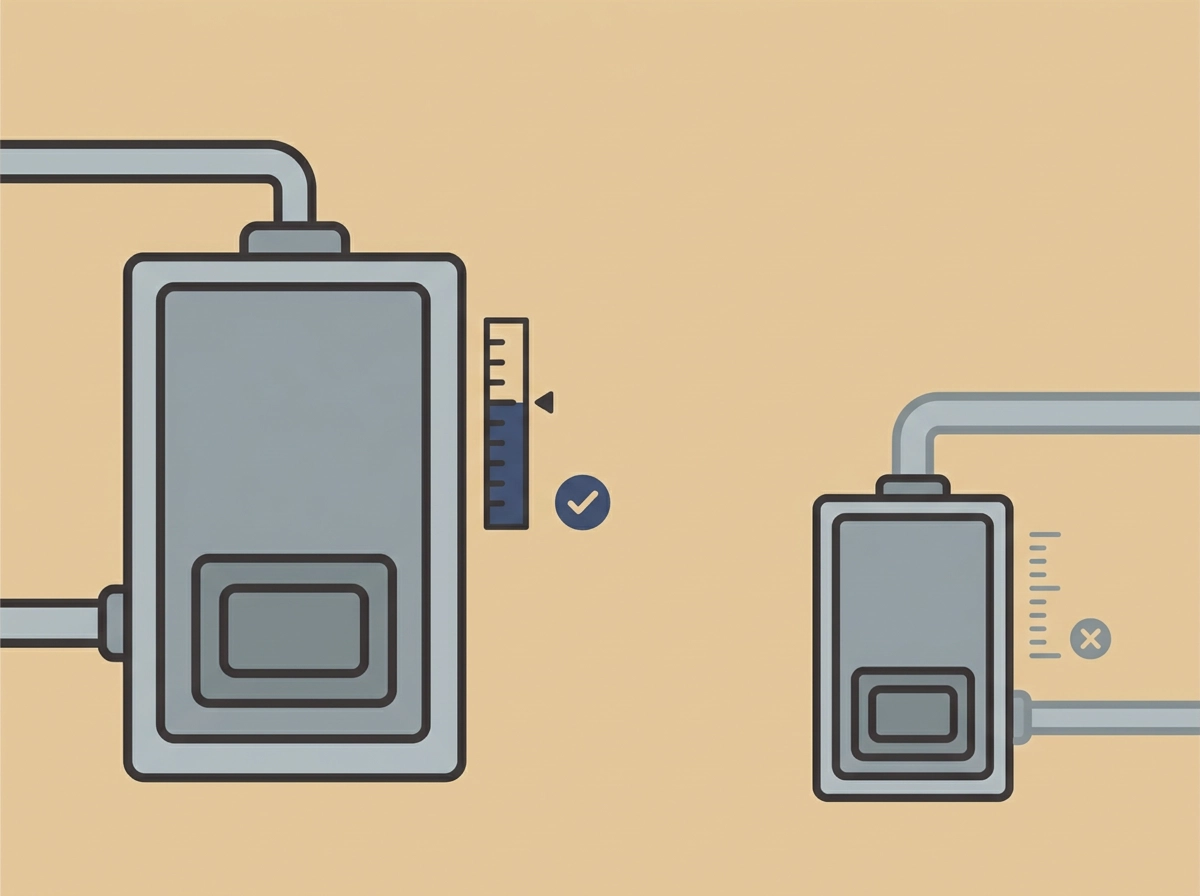
Phoenix winters are short, mild, and completely misunderstood by most national HVAC advice. The right furnace here is a properly sized unit, calculated with real load data for your specific home, not the largest model a contractor can sell you. Oversized equipment, unnecessary upsells, and skipped load calculations are the three most common ways Phoenix homeowners overpay and underperform.
What actually matters is equipment that works for your home across all twelve months: reliable blower motors, quality filtration, and a contractor who treats your desert climate as a starting point rather than an afterthought.
If you are ready to get accurate answers instead of a sales pitch, Gray Goat Air is built for exactly this market. Reach out for a load calculation and honest evaluation. You deserve equipment that fits Phoenix, not equipment sized for Minnesota.