
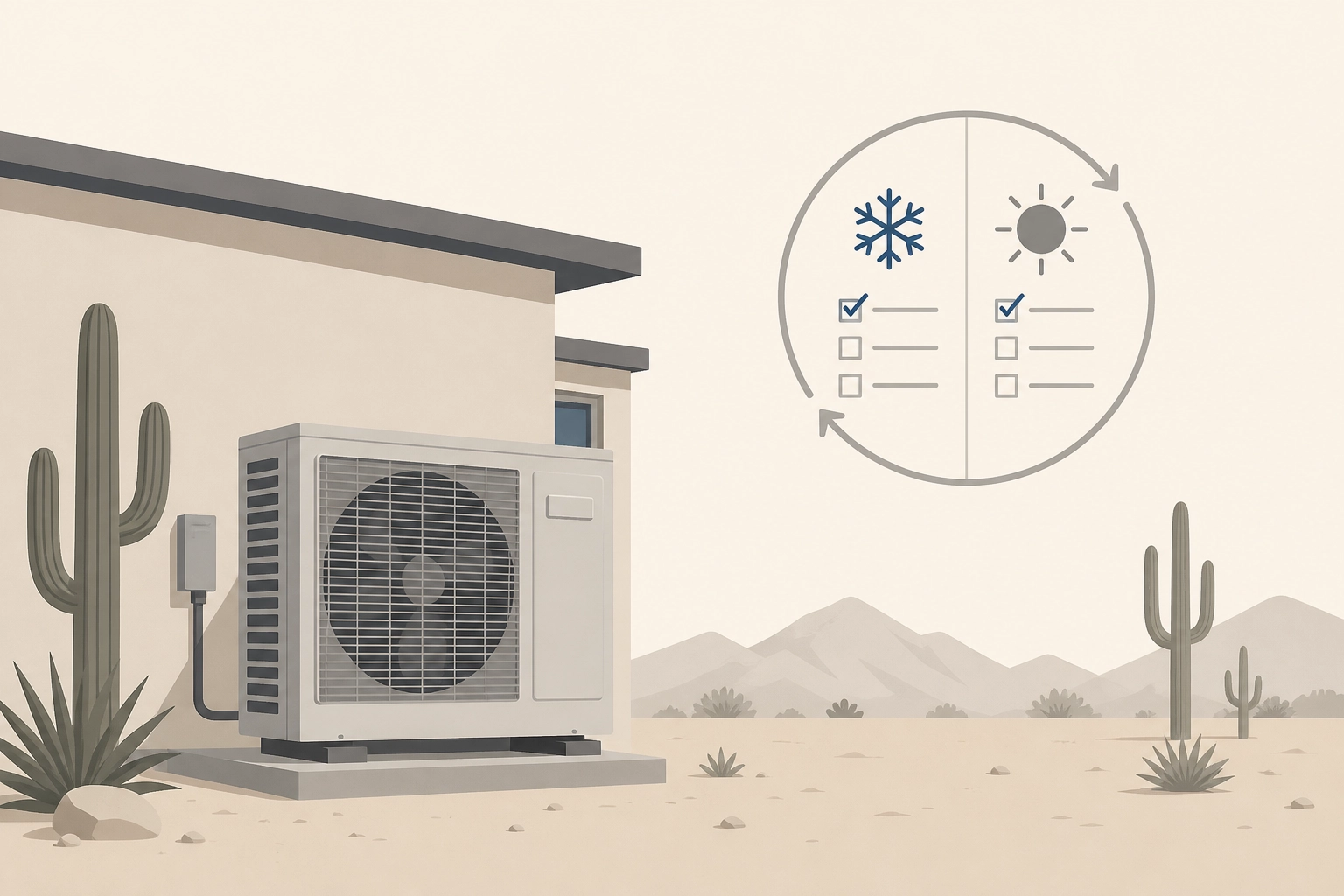
In Phoenix, a heat pump does not get an offseason. It cools through triple-digit afternoons, then shifts to heating when desert nights turn cold, so its runtime stacks up far faster than a furnace-and-AC setup. That is why heat pump maintenance here is not a once-a-year checkbox. It is a season-paired routine, timed to the dust, demand, and defrost cycles this climate creates.
This guide lays out the two service cycles your system actually needs. You will learn why a Phoenix heat pump wears differently, what to have ready before either visit, and how to handle pre-summer tasks like cleaning the outdoor coil before monsoon dust and treating the condensate drain line. Then we move into heating-season service: what the defrost cycle and reversing valve actually do, why they work overtime in winter, filter discipline, and the difference between DIY tasks and professional HVAC maintenance. We will also cover how AC system maintenance differs when one unit does both jobs, symptoms that mean call now, warranty and record keeping, and the twice-a-year habit a desert heat pump earns.
Why a Phoenix Heat Pump Wears Differently Than a Furnace and AC
Most Phoenix homes run one machine that cools and heats. It gets no offseason, so runtime stacks up across all twelve months. A furnace-plus-AC setup splits that load, as our side-by-side comparison explains: the AC works summer, the furnace a few winter weeks, and each unit idles the rest of the year. Neither accumulates a full year of hours. A heat pump does.
Rather than burning fuel to create heat, a heat pump moves it. According to DOE guidance, a properly installed air-source heat pump can deliver up to two to four times more heat energy than the electricity it consumes. HSPF measures that. In the DOE's example, a 10.3 HSPF unit delivers 10,300 Btu per kWh; electric resistance heat manages roughly 3,400. That is the efficiency maintenance protects.
Variable-speed blowers cut airflow at part load, compensating for restricted ducts, dirty filters, and dirty coils. Efficiency can slip well before a homeowner notices a symptom.
Hence the split calendar: a pre-summer visit aimed at monsoon dust, a pre-heating-season visit covering defrost and reversing-valve operation, and filter discipline in between.
What to Have Ready Before Either Service Visit
Before either visit, have these five things settled:
Filter size and MERV rating, read off the current filter's label or the return grille, never from memory, so you order the right replacement the first time.
A simple service log with dates, filter changes, and technician findings, so the calendar lives in a notebook instead of your head.
Two feet of open space on all sides of the outdoor unit, a level pad, and no gravel, vines, or stored items pressed against the coil.
A phone photo of the model and serial number plate, which covers parts lookup, warranty paperwork, and service calls.
A hard stop rule: ice that never clears, oil residue near fittings, a tripping breaker, or a burning smell means call a licensed technician rather than opening a panel.
Once booked, review what a professional HVAC maintenance visit actually covers so nothing on the invoice surprises you.
Cycle One: Pre-Summer Heat Pump Maintenance Before Monsoon Dust
With the filter size logged and the outdoor unit cleared, the first of the two annual visits belongs in spring, before the first dust storms, so the outdoor coil enters cooling season clean. Monsoon dust, pollen, and cottonwood debris pack the fins, raise condensing pressure, and make the compressor work harder for the same cooling.
That visit should cover outdoor and indoor coil cleaning, refrigerant charge verification, capacitor and contactor inspection, condensate drain treatment, and airflow measurement, the scope mirrors what a professional AC maintenance visit actually includes. Insist on measured airflow, not a visual check: variable-speed blowers ramp up to compensate for a dirty coil, hiding the restriction until efficiency has already slipped.
Gray Goat Air performs heat pump maintenance and repair in the Phoenix area. Book before the first triple-digit week, because schedules fill fast once the heat arrives.
Step 1: Clean the Outdoor Coil Before Monsoon Season
Once you're on the schedule, tackle the outdoor coil first. Shut off power at the disconnect before touching the cabinet, and never spray water into an energized unit. Rinse the fins from the inside out with a garden hose at low pressure, working with the fin direction rather than against it, and use only a coil cleaner the manufacturer permits for your fin type. Straighten bent fins with a fin comb; flattened fins choke airflow the same way a layer of dust does. Clear the base pan of debris and check the fan blade for caked dust, which throws the blade out of balance and adds noise and vibration. Recheck the unit after the first monsoon storm, since blown dust can reload a clean coil in a single afternoon. Ductless equipment follows the same rules, as our guide to mini split maintenance in the Phoenix desert covers.
Step 2: Drain Line Treatment and Condensate Management
In cooling mode, the indoor coil pulls moisture from the air continuously, and every drop has to leave the cabinet through the primary drain. Flush that line at each cooling-season service.
Algae growth and dust sludge are the usual culprits, collecting in the trap and line. On a good install, they trigger a float-switch shutdown; on a bad one, a flooded pan and water damage. Confirm the switch actually interrupts the system when the pan fills. Grit carried indoors from a blocked or damaged outdoor condenser unit feeds that same sludge.
Verify the secondary or emergency drain ends somewhere a clog would be visible. The 2021 International Mechanical Code requires discharge to a conspicuous point, not above a ceiling or inside a wall cavity. Ask the technician what your equipment manufacturer recommends for pan treatment; tablets and pour-in products do not suit every unit.
Cycle Two: Heating-Season Service Before the Defrost Cycle Works Overtime
Schedule this visit before the first cold snap, not after. The same unit that cooled the house in July becomes the only heat source in January.
The spring checklist never touches heating-mode components: reversing valve operation, defrost controls and sensors, auxiliary or emergency heat function, and outdoor fan operation in heating. Each deserves its own verification while there is still time to repair before demand peaks.
Refrigerant charge matters differently in heating mode. A low charge shows up as lukewarm supply air and defrost cycles that run long and often.
Confirm defrost termination. A unit stuck in defrost blows cold air indoors while the compressor runs without delivering heat.
Change the filter on the same monthly cadence as summer; it now sits directly in the heating airflow path. Homeowners who prefer these checks documented can review what we can help with.
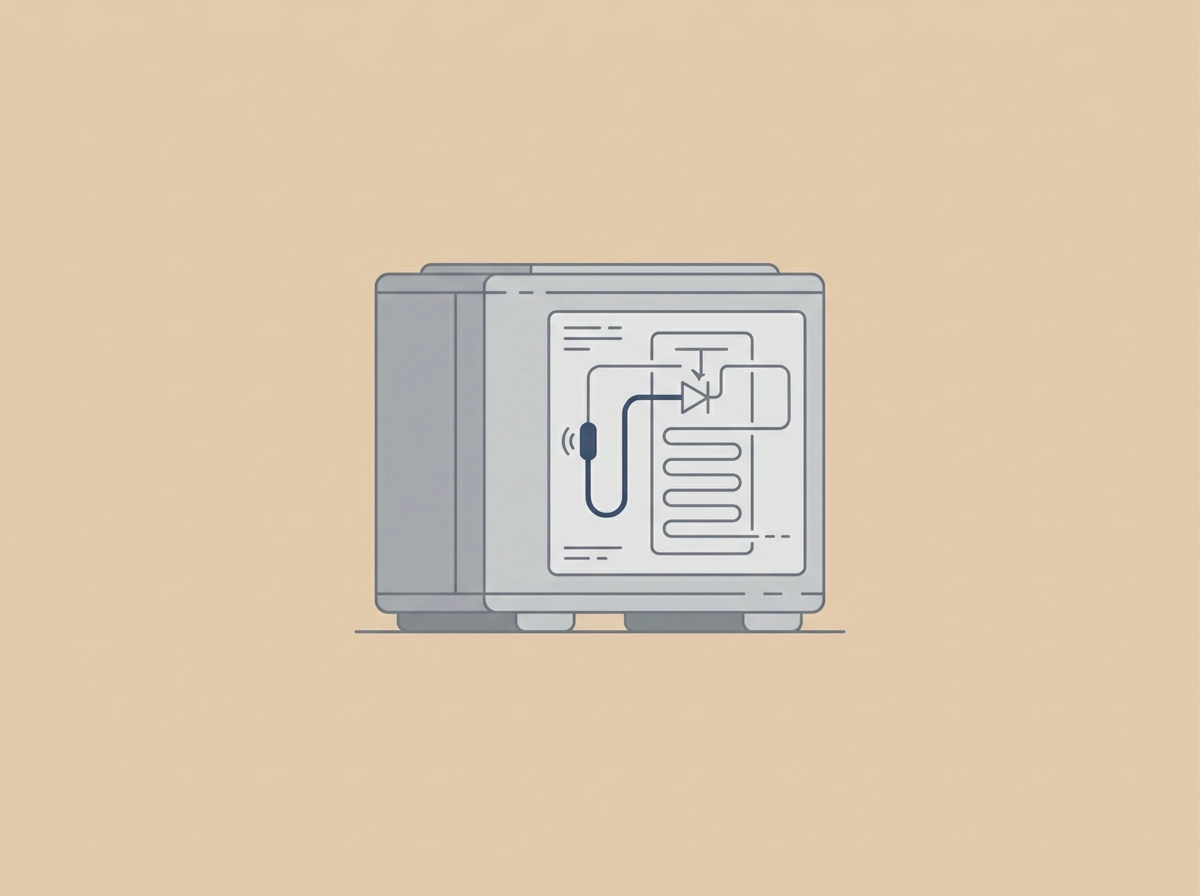
What the Defrost Cycle and Reversing Valve Actually Do
The reversing valve is what lets one machine do both jobs. Per the DOE, it changes refrigerant flow direction so the same equipment cools the house or reverses for the winter defrost cycle.
Defrost is normal operation, not a fault. In heating mode the outdoor coil runs cold enough to frost, so the system periodically reverses to melt it off.
Abnormal looks different: defrost running far longer than usual, triggering constantly, or never seeming to end points to a sensor, control board, or charge issue.
Testing the valve is a technician job. Guidance explains what it does, not how to test it, and DIY diagnosis on a sealed system risks the compressor. Ask the technician to confirm defrost termination and reversing valve operation and log both, because we test the system before recommending the repair.
Filter Discipline During Heating Season
Once defrost checks are logged, the heating season's most frequent homeowner task is the filter. Closed windows and continuous heat mean the filter captures everything your household generates, with no outdoor air diluting the load. Check it monthly during heavy use, and more often with pets, an active remodel, or new construction nearby.
A loaded filter starves airflow, and a variable-speed blower may ramp up to mask the restriction, so efficiency sags before you notice anything. Over-filtering cuts both ways: a high-MERV filter in a duct system sized for low restriction can cost more airflow than it gains in dust capture. Write the install date on the frame, and the next check is a glance rather than a guess. For the larger payoff, see how regular maintenance protects your efficiency investment.
DIY Tasks Versus an HVAC Maintenance Service
Filter discipline is yours to own, so here is where the rest of the line falls.
You handle filter changes, keeping the outdoor unit clear, rinsing a visibly loaded coil, and reporting new noises, odors, or water. A technician handles refrigerant charge, electrical components, defrost and reversing valve operation, and anything behind a service panel. Federal rules require certified technicians for refrigerant work.
The twice-a-year cadence in this article assumes a professional visit at each season change, with your habits filling the months between.
Comparing a maintenance plan to one-off visits? Ask what each visit actually includes and which items are season-specific. Headline prices tell you very little.
Gray Goat Air services, maintains, and repairs heat pumps in the Phoenix area and also sells air conditioners, furnaces, heat pumps, and mini splits, so a single appointment can cover more than one system in your home.
How AC System Maintenance Differs When One Unit Does Both Jobs
In a furnace-plus-AC home, AC system maintenance happens once, in spring, because the condenser sits out the winter entirely. A heat pump never gets that rest. The same equipment runs through winter, so the second visit is not a duplicate; it covers heating-mode components the spring visit never touches.
The two checklists split cleanly:
Cooling-mode checks: coil cleaning, condensate drain, refrigerant charge, airflow.
Heating-mode checks: defrost operation, reversing valve, auxiliary heat, heat output.
If a technician runs an identical checklist twice a year, that is a red flag, because half of it is out of season at any given visit.
Ask for visit notes that list what was measured and the numbers behind it, not just a line stating the unit was serviced.
Symptoms That Mean Call Now, Not at the Next Cycle
Even a season-appropriate checklist cannot cover everything. Some symptoms mean call now, not at the next cycle.
Ice that stays. Frost on the outdoor unit should melt off during defrost. Ice that persists, or a unit that never enters defrost, signals a control, sensor, or charge fault.
Weak heat. A heat pump supplies warm air, not furnace-hot air, but it should raise room temperature steadily. If it cannot, stop waiting.
Breaker trips, burning smells, repeated float-switch shutdowns. Any of these is a stop-now condition. Call a licensed technician.
A bill spike with no habit change. Unexplained increases often trace to coil fouling, refrigerant charge, or restricted airflow.
Water near the air handler. Stains, a damp ceiling, or a musty odor usually means the drain has already overflowed.
These warrant a service call now, not at the next cycle.
Keeping Warranty and Service Records Straight
Once a symptom appears, your records become the deciding factor in how the fix gets covered. Start with your own manufacturer documentation, because maintenance terms vary by brand and model, and no general rule substitutes for the language attached to your unit.
Keep a dated log of filter changes and professional visits. If a covered part fails, that history is what supports the claim. Ask the technician to write down what was tested and what the numbers were, not just that service was performed. If you never registered the equipment, do it now, and store the model and serial numbers where you can find them.
Gray Goat Air maintains, services, and repairs heat pumps and other HVAC equipment in the Phoenix area, which is where the professional half of this calendar gets handled.
The Twice-a-Year Habit a Desert Heat Pump Earns
Keep those records current, because the calendar itself is simple: one machine runs all year, accumulating runtime that a furnace and an AC never do, so two season-timed visits outperform one generic tune-up.
Book spring service before monsoon dust.
Book heating service before the first cold snap.
Change filters monthly during heavy use.
Flush the drain line each cooling season.
Log every visit.
The homeowner half, filters and a clear outdoor unit, is what makes the professional half pay off. Skip one and the other does less. Skipping a season is how small airflow problems become compressor problems.
Want the twice-a-year service handled? Gray Goat Air's heat pump lineup and its maintenance and repair service page cover Phoenix-area homeowners.
Conclusion
A Phoenix heat pump earns twice-a-year attention because one system handles cooling and heating in a punishing desert climate. Spring service should come before monsoon dust, and heating service before the defrost cycle works overtime. Between visits, monthly filter changes and a clear outdoor unit protect airflow. Dated records of filters and professional visits also keep warranty claims stronger when covered parts fail. If you need the professional half handled, Gray Goat Air maintains, services, and repairs heat pumps and other HVAC equipment in the Phoenix area, and its heat pump lineup and maintenance and repair service page cover Phoenix-area homeowners. Book your next seasonal visit before the weather demands it. Treat the calendar as preventive care: two small appointments now can spare you a compressor problem later.